
Tablescape Ideas: How to Set a Table Like a Work of Art
Simple tips and creative table setting ideas for casual dinners to holiday gatherings
Setting a beautiful table is one of my favorite forms of artistic expression. I consider tablescapes a blank canvas where I use my imagination – and some choice tableware and unexpected touches – to create table settings that feel like works of art. Whether it's casual family dinners or dinner parties and holiday gatherings, I believe every meal deserves a thoughtfully styled table.
I enjoy everything about table styling – coming up with tablescape ideas, pulling pieces from my collection, and putting it all together. But most of all, I love seeing friends and family enjoying themselves over the setting I created. I truly believe that a beautiful table is the stage for gathering. It doesn't have to be formal or fussy. It's not about having the fanciest dishes (or matching ones either). It doesn't even matter if you're serving takeout or an elaborately home-cooked meal. Rather, it's the small touches and an evolving collection of tableware that set the mood and transport your guests. I'm going to share my simple formula for creating stunning tablescapes and practical tips to bring your table decor ideas to life for occasions casual or formal.
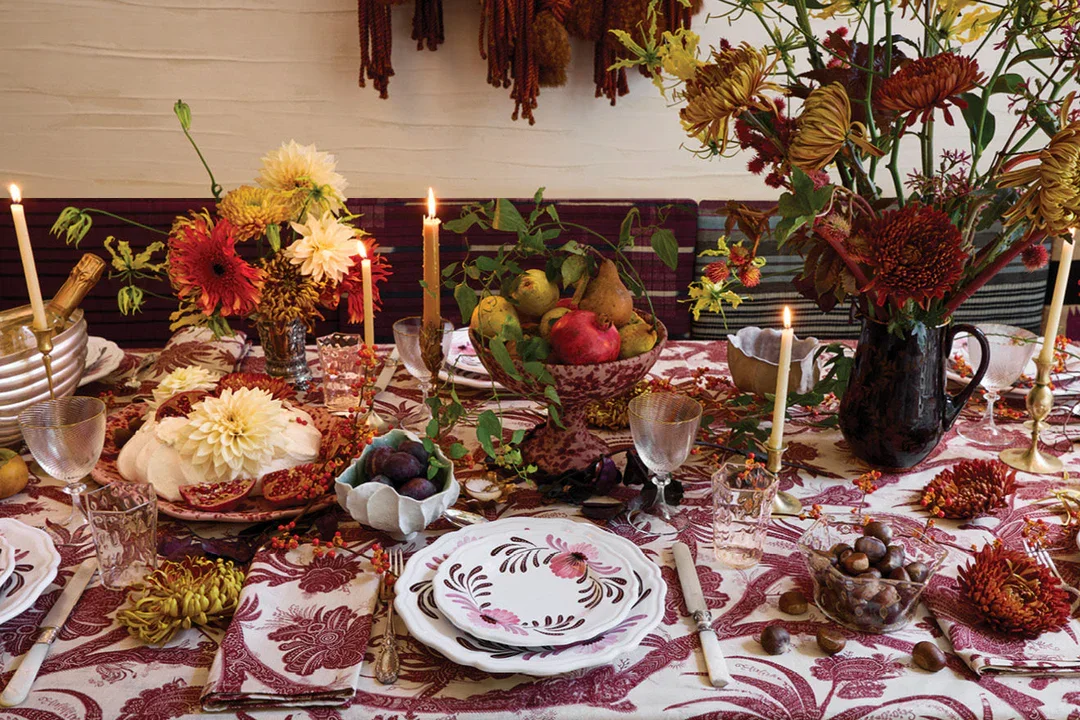
Ulla Johnson x Cabana Magazine collection
A curated guide to creating a one-of-a-kind home: interior inspiration, styling tips, & unique objects
FOLLOW ALONGRELATED ARTICLESMama’s Down Under Apple Pie Recipe
Homemade Granola Recipe That’s So Good You’ll Make It Every Week
The 8 Fast & Festive Hors D'oeuvres Recipes for Your Next Party
sense of spen• cer
noun [sɛns, əv, ˈspɛnsər]
Reflecting one’s identity through their interiors
A home with character and soul
When a house becomes a home
My 5 Principles for a Beautiful Tablescape
After years of setting tables for holidays, dinner parties, and everyday meals, I've landed on a simple formula. Well, it’s really more like a philosophy for creating memorable tablescapes. Here are my 5 go-to tricks:

A green & pink table I made with favorite Christopher Spitzmiller plates
RULE 1: Create a Color Scheme
I like to start with establishing a color palette – restricting colors helps to create a cohesive look (vs. many colors can look a little chaotic). This is especially important when mixing patterns (my tips for mixing patterns). I like to choose 2-3 colors max. But the key thing to remember is that you should use different tones of those colors to prevent it from looking one-note. For example, if it’s pink and green, you can use magenta, pale pink, chartreuse, and moss green. And it doesn’t need to be stringent – obviously not all of your china is going to fit each color palette; so just focus on the key elements and things you have control over and don’t sweat the rest. Little pops of unexpected color can bring life to a table.
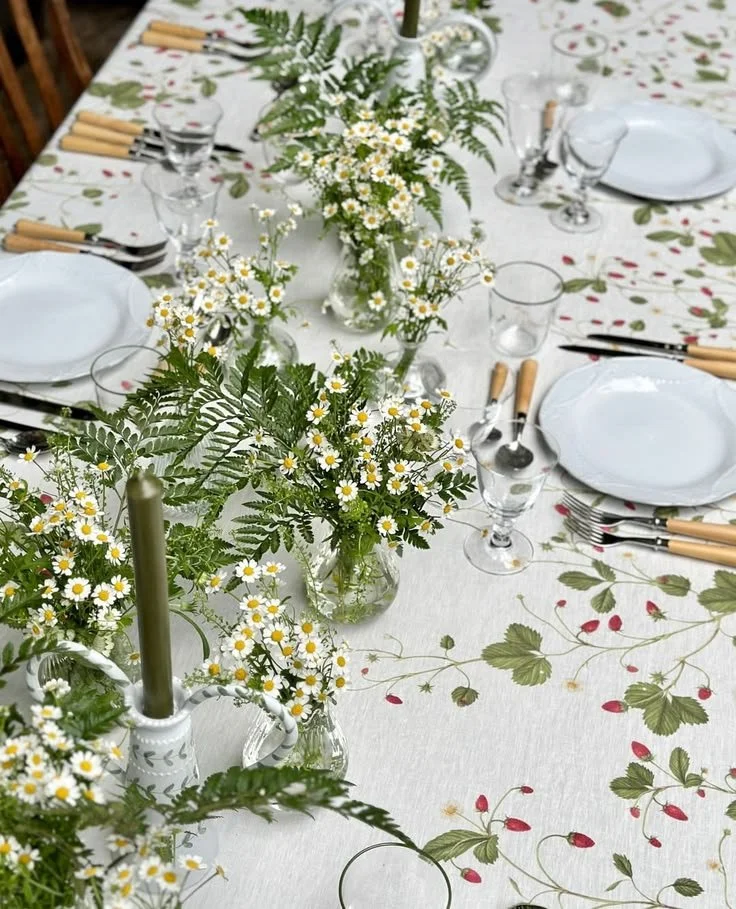
Summerhill & Bishop table setting
RULE 2: Keep Florals Simple
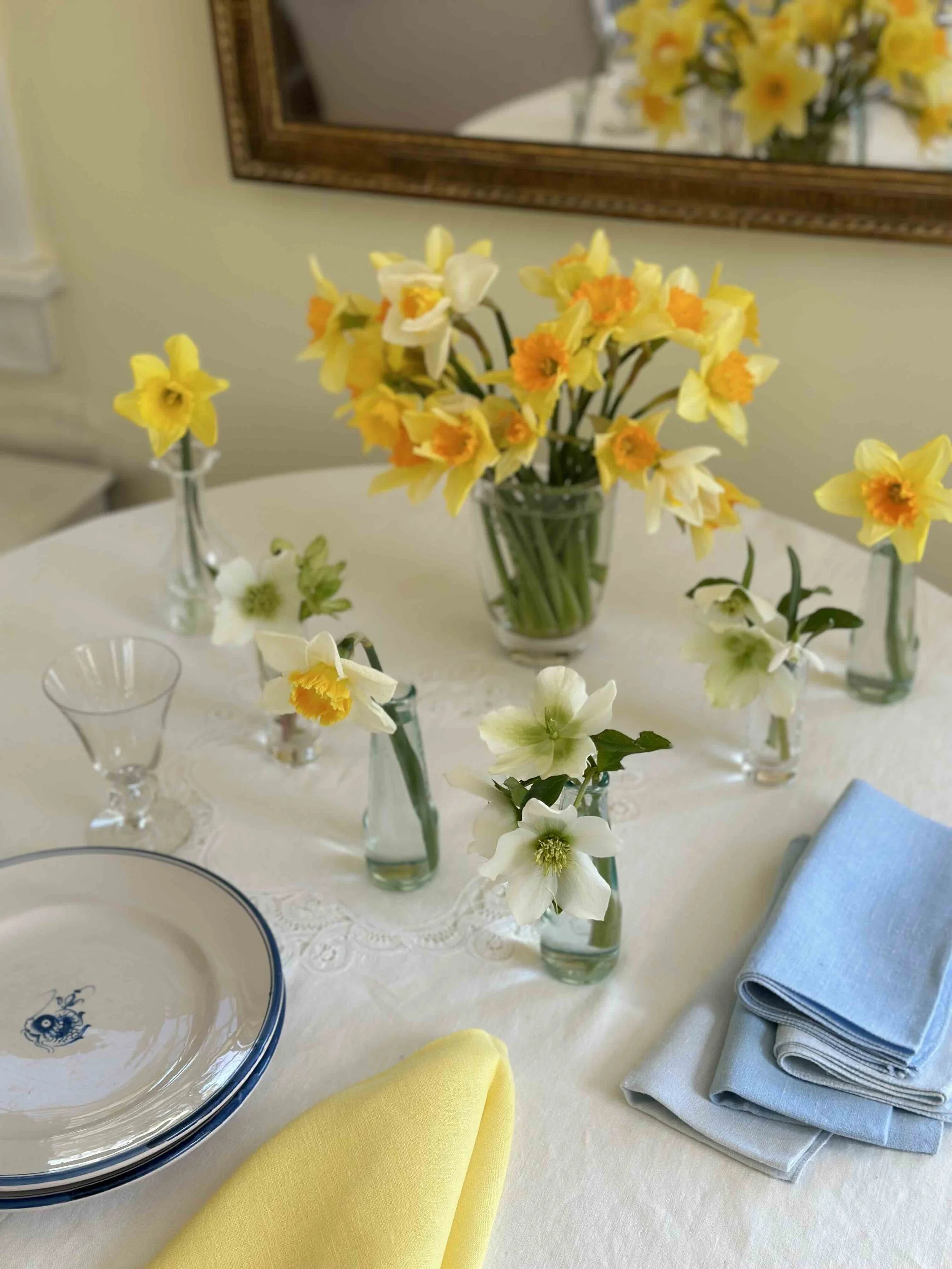
I think people have it in their head that they need to have a ‘wow’ flower arrangement for their tablescape. However, if you study photos from events or just beautiful casual tables, more often than not the flowers are super simple. When arrangements are too big they block people’s view across the table and actually restrict engagement. Concentrating all the flowers in just one part of the table can look a bit stiff and static. Alternatively, I like to display smaller arrangements or flowers pots down the table which helps bring it to life. There is no rule that says you need to mix different flowers – even just one or two types of flower in bud vases is lovely. If displaying pots, you can use moss to cover the dirt.
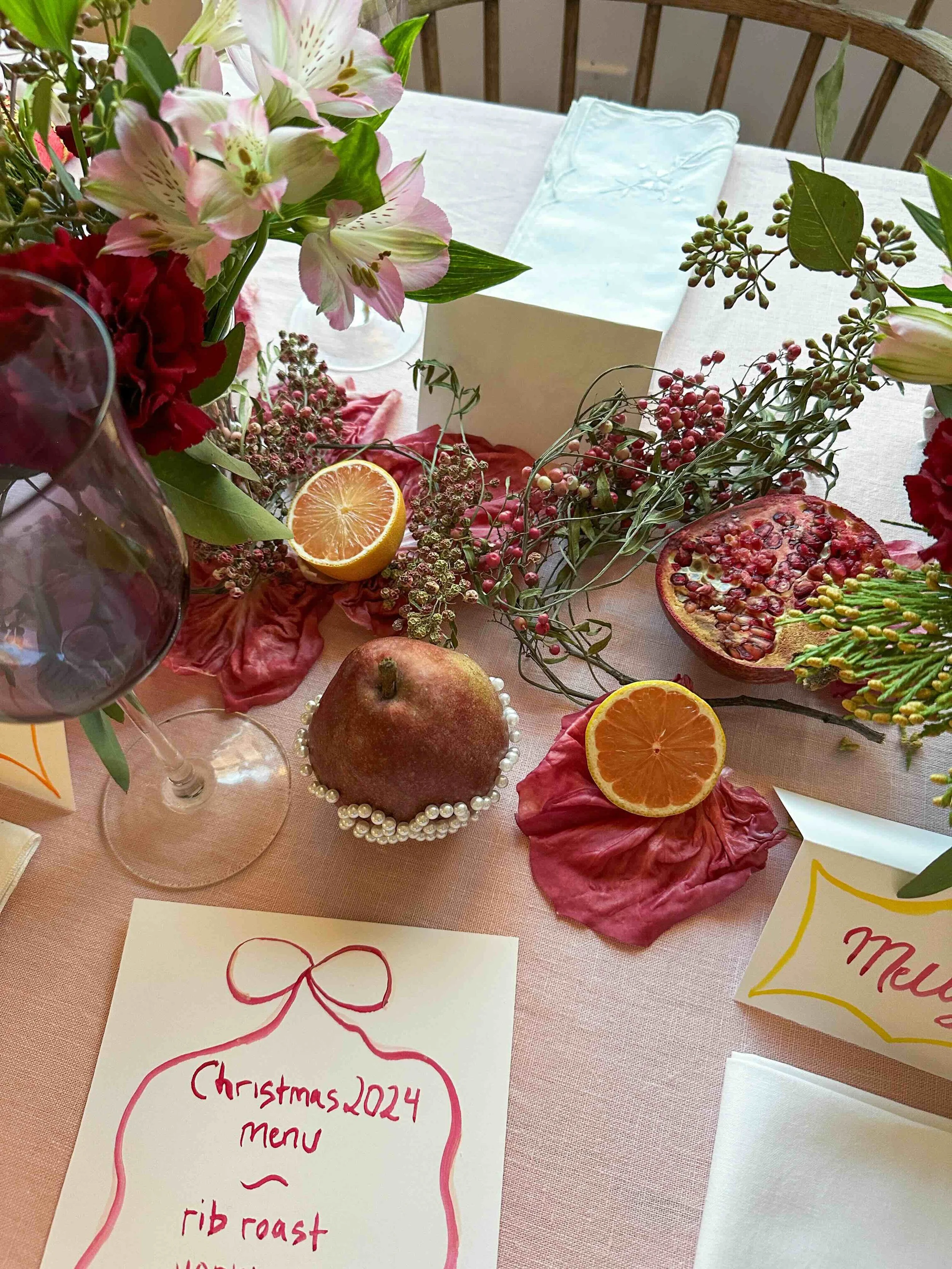
A table I decorated with pears (encrusted with pearls), pink lemons, pomegranates, radicchio and pink peppercorns
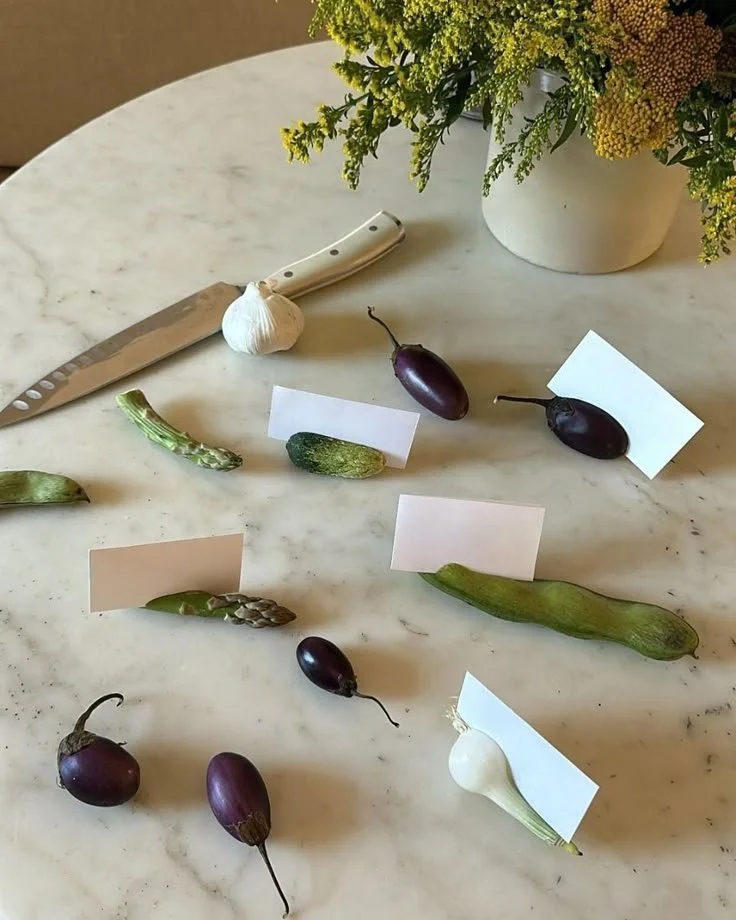
Vegetables, including cucumbers, beans, baby aubergine, asparagus, and onions, used as place card holders (via Gatherings by Emily)
RULE 3: Use Fruit as Props
I am passionate about using fruit and even vegetables to decorate tablescapes either alongside flowers or in place of them. I mean, if you think about it, produce is the one thing we all typically have on hand, so why not get creative with it? For starters, you can scatter fruit or vegetables, cut or whole, directly on the table and/or display in bowls or raised pedestals. You can use fruit or vegetables as place card holders or turn them into candle holders. My recommendation is to stick to seasonal produce: so in winter, say on a holiday table, I’ll use pomegranates or citrus; in the springtime, cabbage, peas, and radishes; tomatoes in summertime; pumpkins, gourds, and pears in fall.
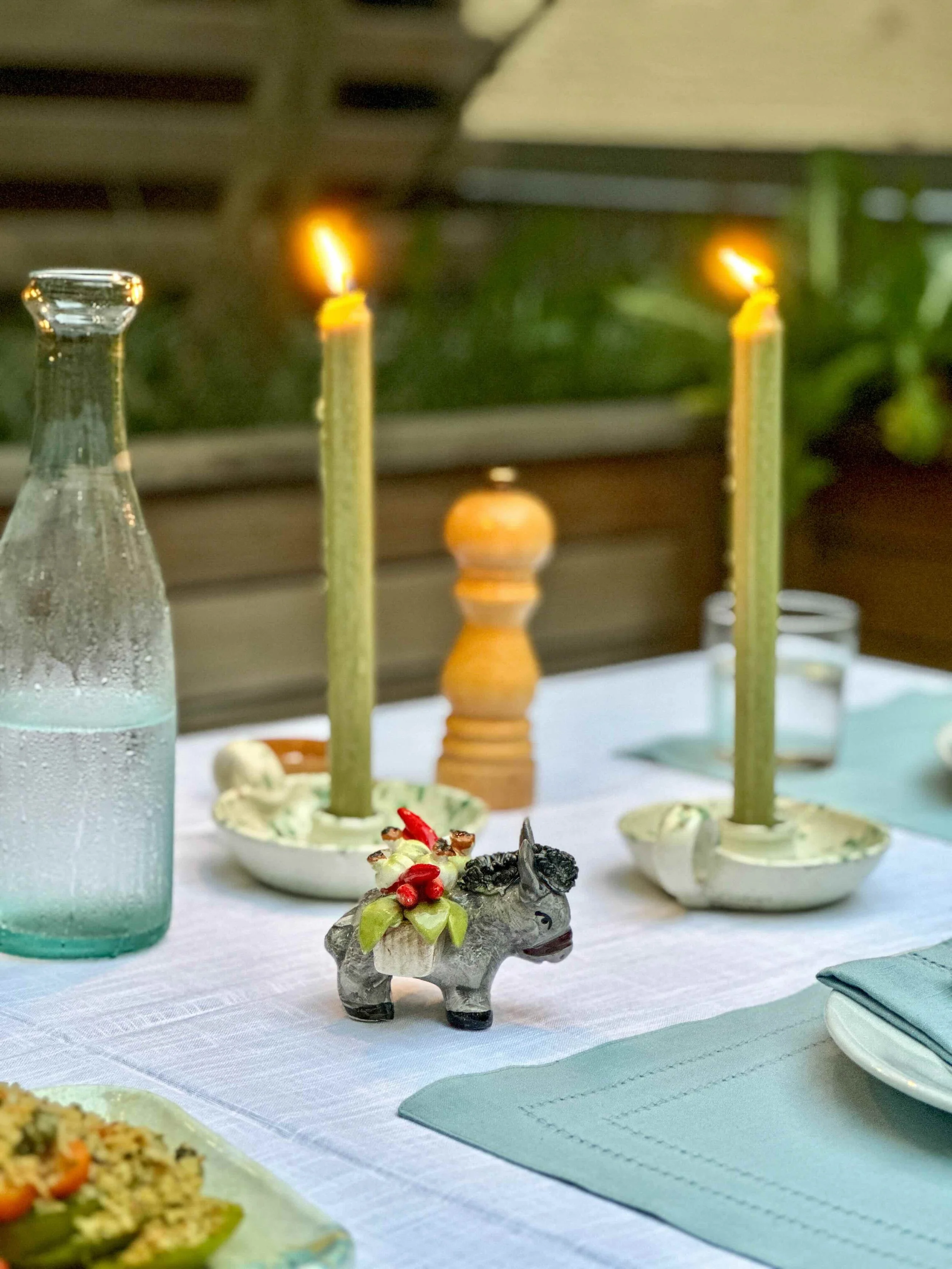
A ceramic donkey I got in Italy used as table decoration
RULE 4: Add Unexpected Objects
In addition to flowers and fruit, I like to mix in unexpected objects, like ceramics animals or small sculptures. These little details add personality and act as conversation starters. Don’t overthink it – just grab something you love that fits the theme of the table. For instance, I decorated a summer outdoor table with a ceramic donkey I bought in Ravello, Italy; it just kind of felt right on a sultry al fresco setting. I could imagine a lamb figurine looking lovely on an Easter table.
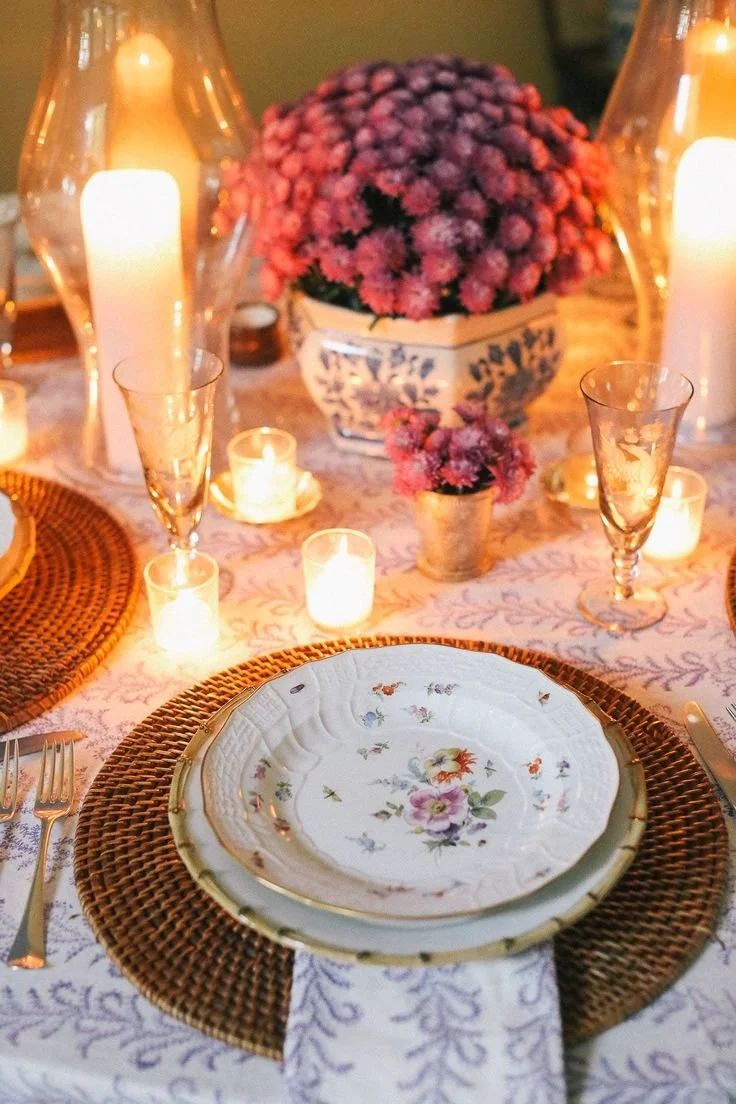
A candlelit table (source unknown)
RULE 5: Lots of Candles
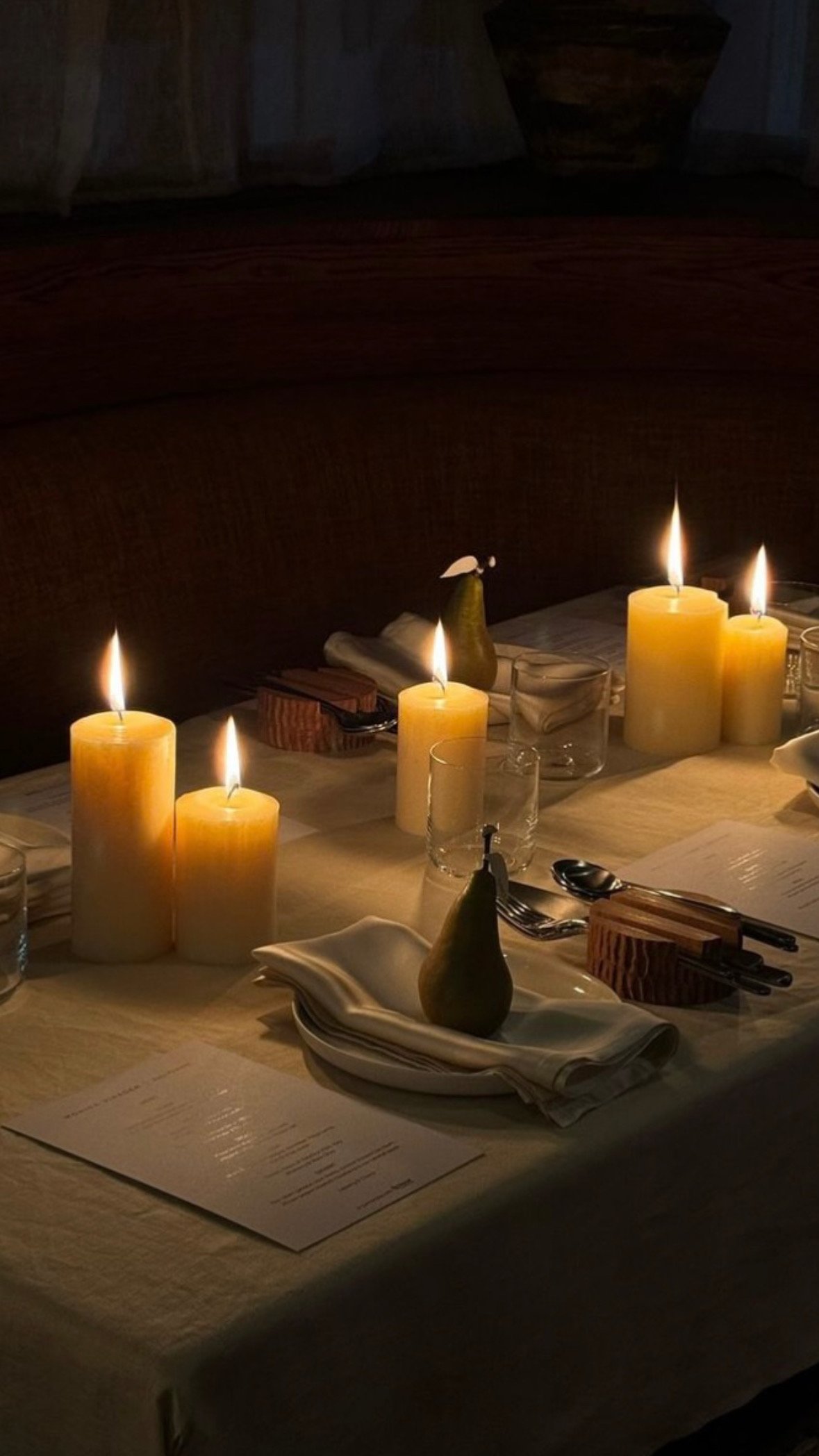
Candles are an obvious table essential. Candlelight = instant atmosphere. More candles are always better. I can see people thinking, “but I don’t have that many candleholders that match”. They don’t need to – and in fact, I think a mix of different types of candles, candle holders, and heights creates a much more interesting tablescape. Combine tapers, votives, pillars, and candelabras, making sure some are tall and some are low. It’s totally fine to mix materials with the candle holders (ceramic, silver, glass) and candle colors too.
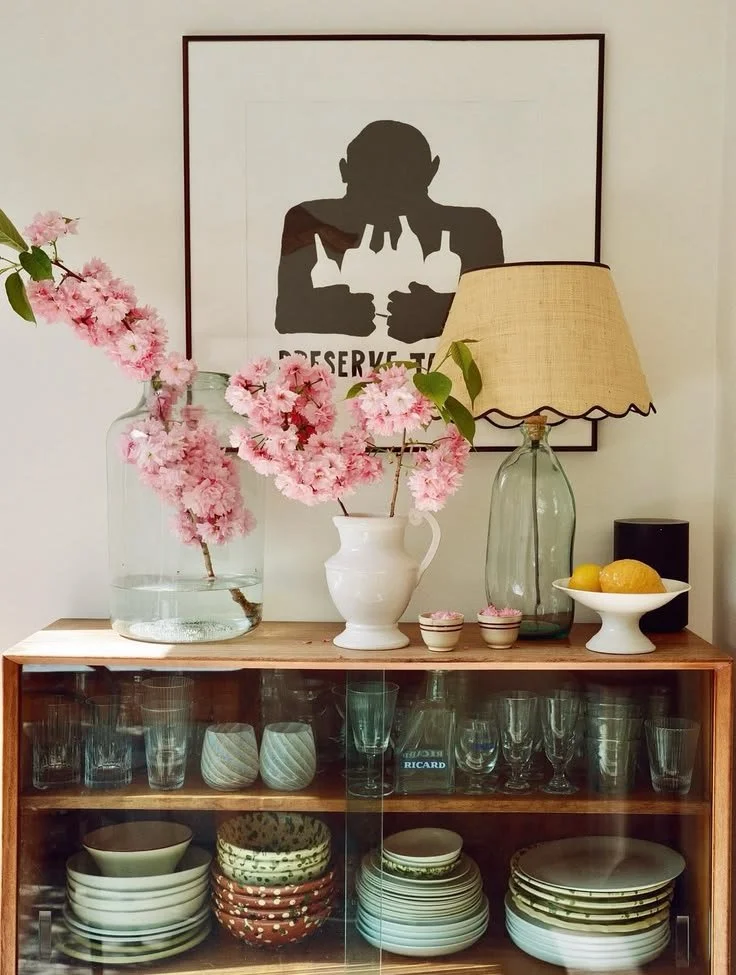
A tableware collection from Charlotte Bland
Building Your Collection Over Time
I think of tableware as a collection you build over a lifetime. It truly would not be as much fun or as meaningful to get it all at once. Tablescapes are like creating outfits so it’s always good to have options.
Start with: The Basics
It’s a good idea to start with the basics you can use for every day and dress up for formal occasions. But remember, basics don’t have to be boring.
Versatile dish set - White dishes are the most practical if you're starting from scratch. They don’t have to be completely plain though. Consider a colorful rim, a textured detail, or painted flourish. If you love them, you’ll never get sick of them, and you can always layer in other dishes down the road. Remember to get a set of eight including a dinner plate, lunch plate, fruit bowl, and ideally shallow bowls or pasta bowls. You don’t need matching cups or anything else; it’s more fun to mix and match.
Simple glassware - For the same reason you should pick everyday glasses with good design. I’d suggest a matching set of tall and short drinking glasses as well as stemmed glasses for water and wine (though you can use drinking glasses for wine!).
Quality all-season flatware - My biggest regret is not buying a beautiful flatware set that works for every day and special occasions. This is worth a splurge if you ask me. If you choose something classic like pewter or stainless steel with acrylic handles, you’ll have it forever. I’d get eight complete sets with salad and dinner forks, dinner and dessert spoons, and a knife.
Simple table linens - It’s nice to have simple napkins and tablecloths for when you want to elevate an everyday table, just because or you have friends coming over. For a casual table I’ll just use cloth napkins. A tablecloth instantly adds polish to a table (plus you can turn a cheap table into a fancy one with a tablecloth).
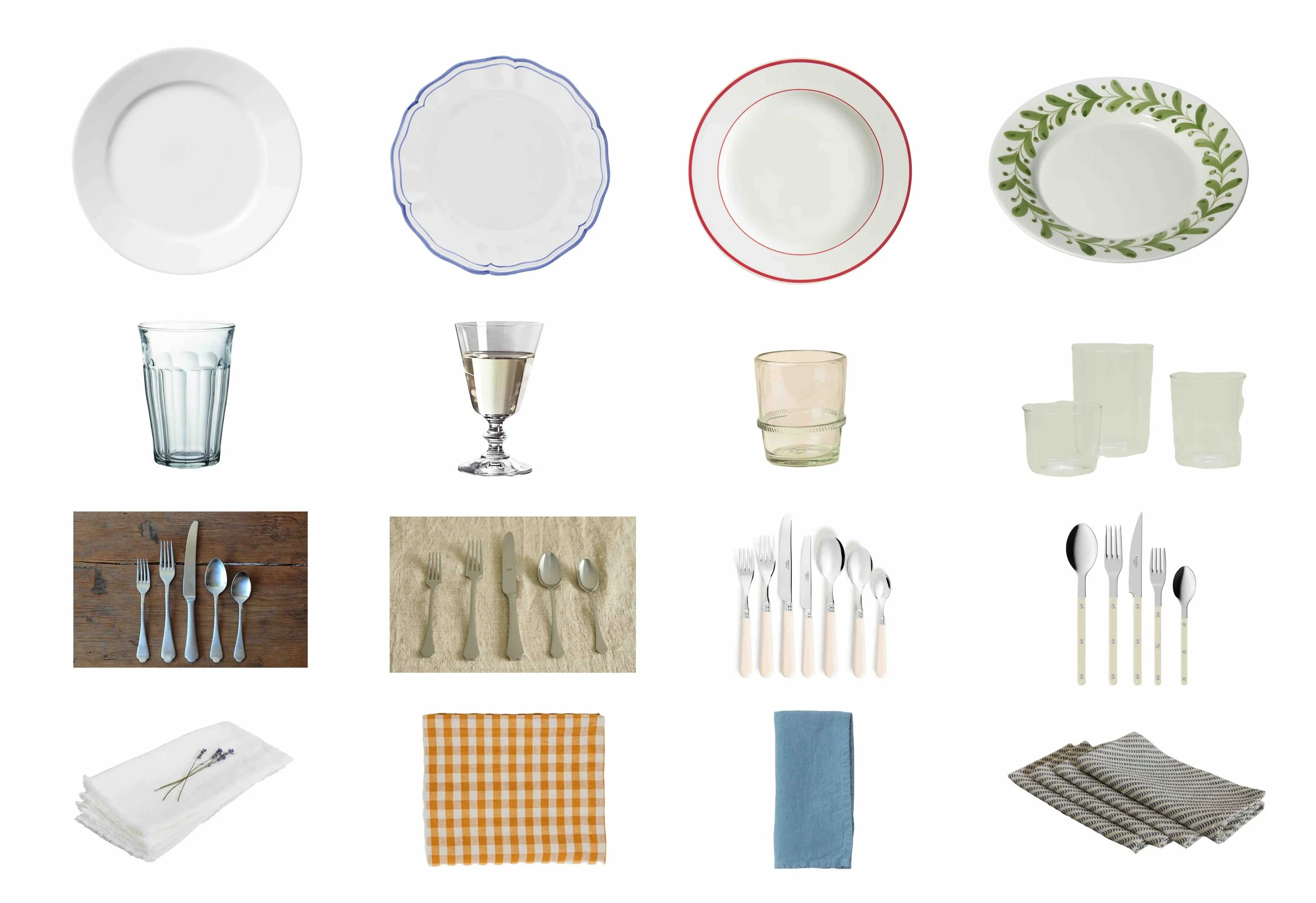
Row 1: Apilco porcelain dinner plates. Scalloped dinner plates, marine blue. Porcelain dinner plates, red rim. Olive dinner plate. Row 2: Duralex tumblers. French wine glasses. Banded recycled glass (I have these and love them). Essential glassware. Row 3: Italian flatware set. Moretto flatware set. Classic cutery set, ivory (I also love the red). Sabre bistrot flatware set, ivory. Row 4: Fringed linen napkin. Check tablecloth, mist/cider. Washed linen napkin (comes in other colors). Crescent napkins, midnight.
Add: Tablescape Accessories
The next thing to add to your collection are table linens and serving pieces that you can mix and match to create unique tablescapes.
Table linens - Tablecloths and napkins are the easiest way to create different tablescapes so you should collect more to give yourself options. I like to use a white or solid color tablecloth as a simple backdrop when creating more dramatic tablescapes, or I’ll go with a lightly patterned tablecloth and keep everything else simple. Buying matching tablecloth and napkins takes the guesswork out of dressing a table, but it can also be nice to mix and match napkins and table clothes in different patterns. (See tips for pattern mixing.)
Placemats - With a bare table these are a nice option to protect the table and add some personality. They’re not necessary on a tablecloth but can be useful for layering when creating a tablescape.
Serving platters & bowls - You can literally never have enough platters, salad bowls, and pitchers. I recommend just collecting ones you love, and you can mix and match them.
Salt & pepper shakers - These can be an opportunity to add personality to a table in addition to their main purpose.
Candles and other accents - It pays to have a good pair of candlesticks that can go on almost every table; then mix it up with different color tapers and supplement with votives and pillars. Other accents include pedestal dishes, small bowls, and bread baskets.
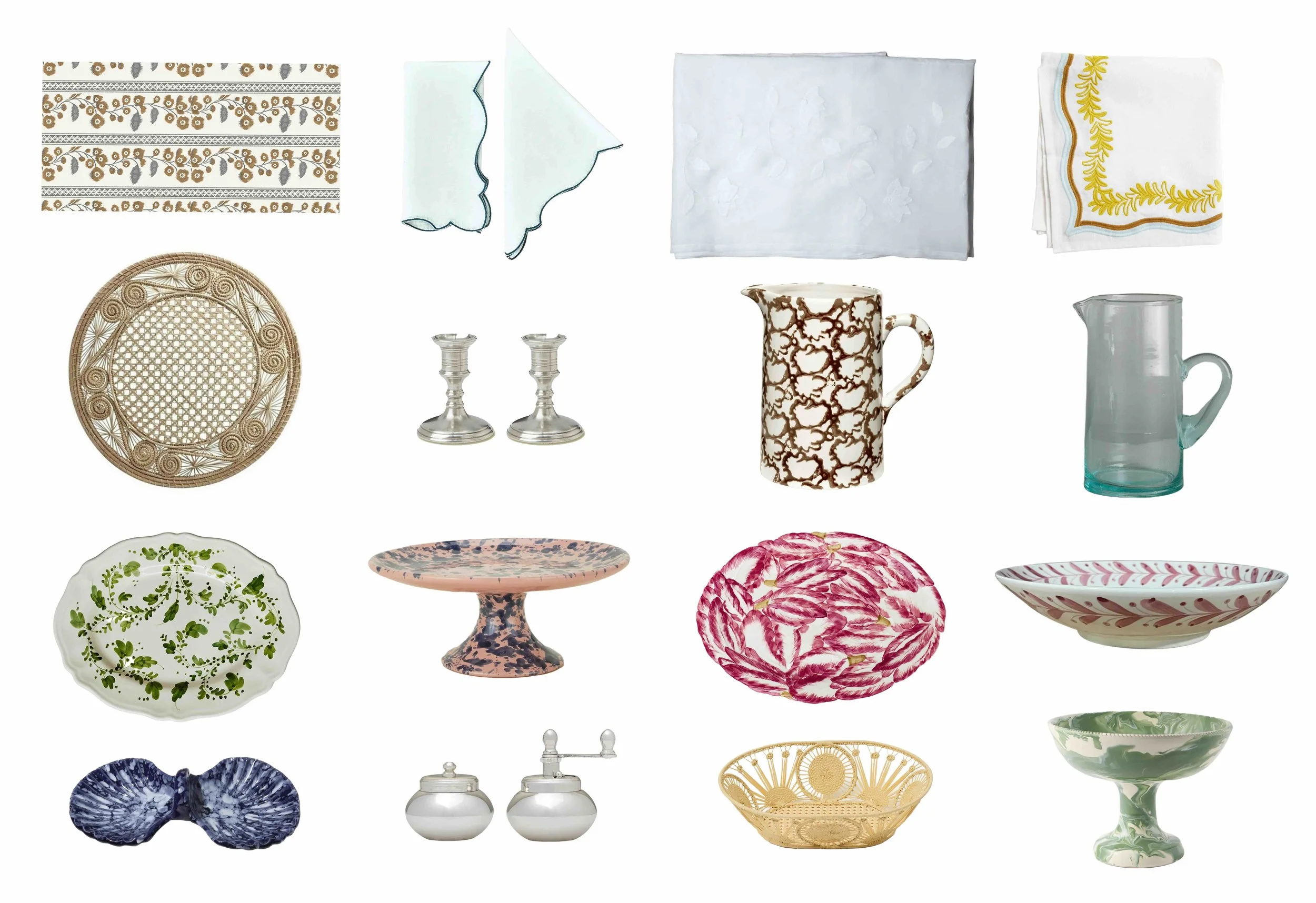
Row 1: Garden-inspired tablecloth. Scalloped linen napkin, blue/white. Applique tablecloth. Embroidered napkin. Row 2: Straw placemat (I have these, and they really do elevate a table setting). Pewter candlestick. Spongeware pitcher. Moroccan glass jug. Row 3: Hang-painted oval platter. Splatter cake stand. Radicchio platter. Painted serving bowl. Row 4: Double conch salt & pepper cellar. Silver pepper mill & salt shaker. Raffia bread basket. Marbled fruit stand.
Be on the lookout for: Special Pieces
Once you have the most necessary pieces covered, you can focus on more unique items that can expand the options for creating your tablescapes.
Vintage - Any of the above but vintage. Don’t worry if you can’t get a complete set; take what you can get if you love it, and you’ll always find a use for it.
Statement pieces - Always keep an eye out for wow pieces, like a dramatic candelabra or exquisite tureen, you can use to take a tablescape to the next level.
Formal tableware - You can complement your everyday tableware and glassware with more elevated sets. Typically, these are made of high-quality materials and decorated with fine details.
Seasonal tableware - It can be nice to have different tableware for warmer and colder months. For instance, colorful glassware, a boldly patterned tablecloth, and bamboo flatware look great on an al fresco summer table while moody glassware, earthy plates, and tortoiseshell flatware enhance a fall table.
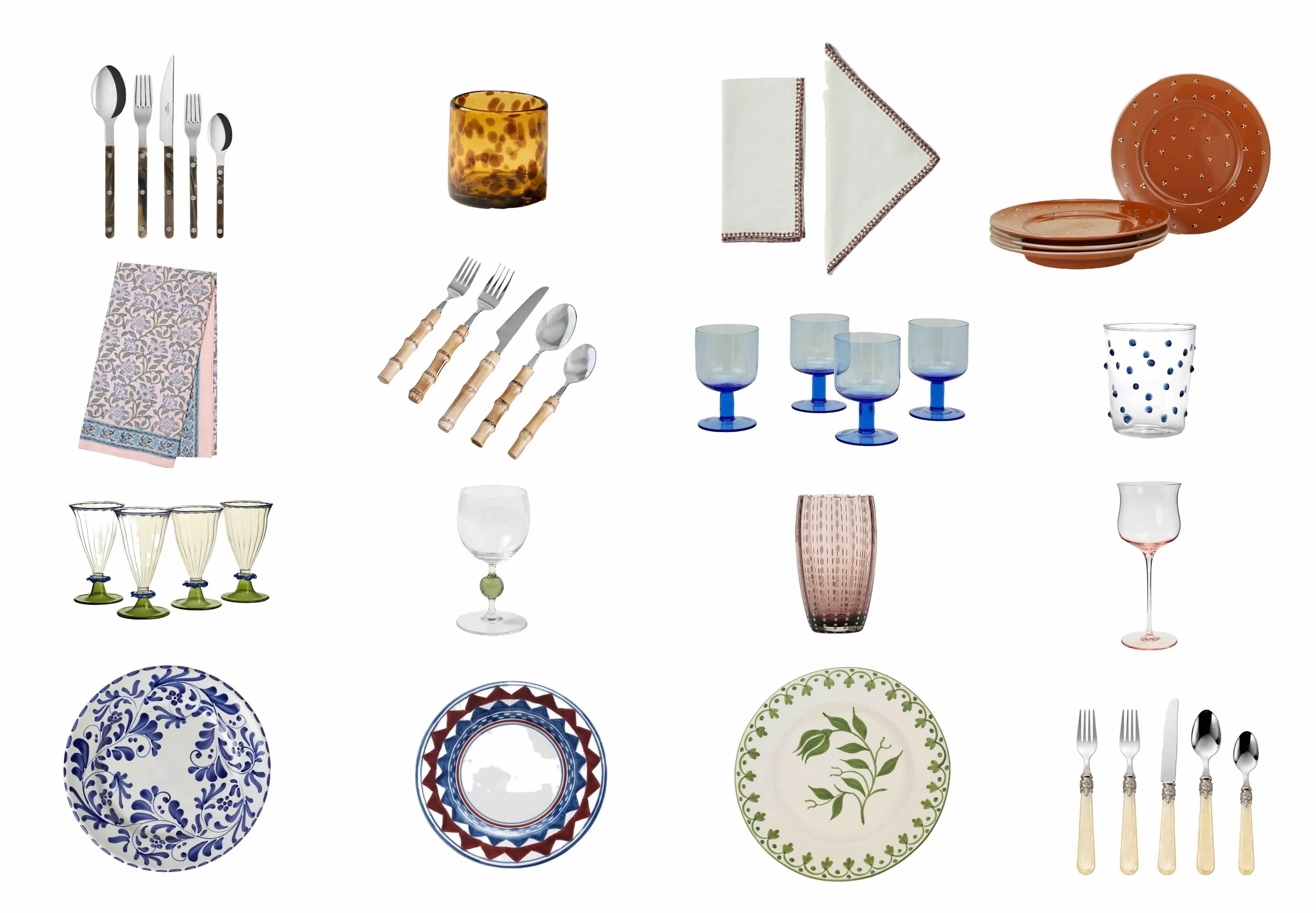
Row 1: Sabre bistrot flatware set, buffalo. Tortoiseshell glasses.Brown embroidered napkins. Dotty dinner plates. Row 2: Dusty pink tablecloth. Bamboo flatware set. Seeded stemmed glassware, blue (available in other colors). Polka dot tumblers. Row 3:Green stemmed wine glasses.Glass ball wine glasses. Dotted glasses, amethyst (available in other colors). Curved wine glass, pink (available in other colors). Row 4: Floral hand-painted dinner plate. Geometric painted salad plate. Flower dinner plates. Ivory pearlized flatware set.
Building Your Tablescape: Layer by Layer
A beautiful tablescape comes together by layering one element at a time. Here’s the order I would build the table using all the elements and applying the principles above.
Layer 1: Foundation
Start at the bottom of course. Decide if you’re using a tablecloth or runner and lay that down first.
Layer 2: Place Settings
Next focus on the individual place settings. If using a tablecloth, you have the option of using a charger or a placemat at each setting — or use them together for a layered, formal look. On a bare table, a placemat offers functional everyday protection and helps to elevate the look. Choose napkins that match or play off of the tablecloth and placemat/charger. Complete the setting with plates, glasses, and flatware.
Layer 3: Details
Once those core elements are placed, then you can get into the finishing touches. Place candles around the table — at least a set of candleholders with taper candles. For more formal tables, mix in other types of candles like votives, pillars, or additional sets of candle holders (no need for them to match). Add a salt & pepper set (or more if it’s a big table). If you want to up the ante, include an unexpected object and place cards.
Up until this step can be done well in advance of the event — and should be to take pressure off.
Layer 4: Decoration / Centerpiece
Fresh elements should be added closer to the event. This includes flower arrangements or potted plants and/or fruit as decor. I like to layer in these bits one at a time and move them around until I get the look I want. Sometimes that means removing pieces to get the right balance.
Styling Tables for Different Occasions
A tablescape should meet the moment. The choices you make in terms of color, tableware, and thoughtful details can separate a casual table from a formal table and day from night. Here are ideas for how to set the table for various occasions.
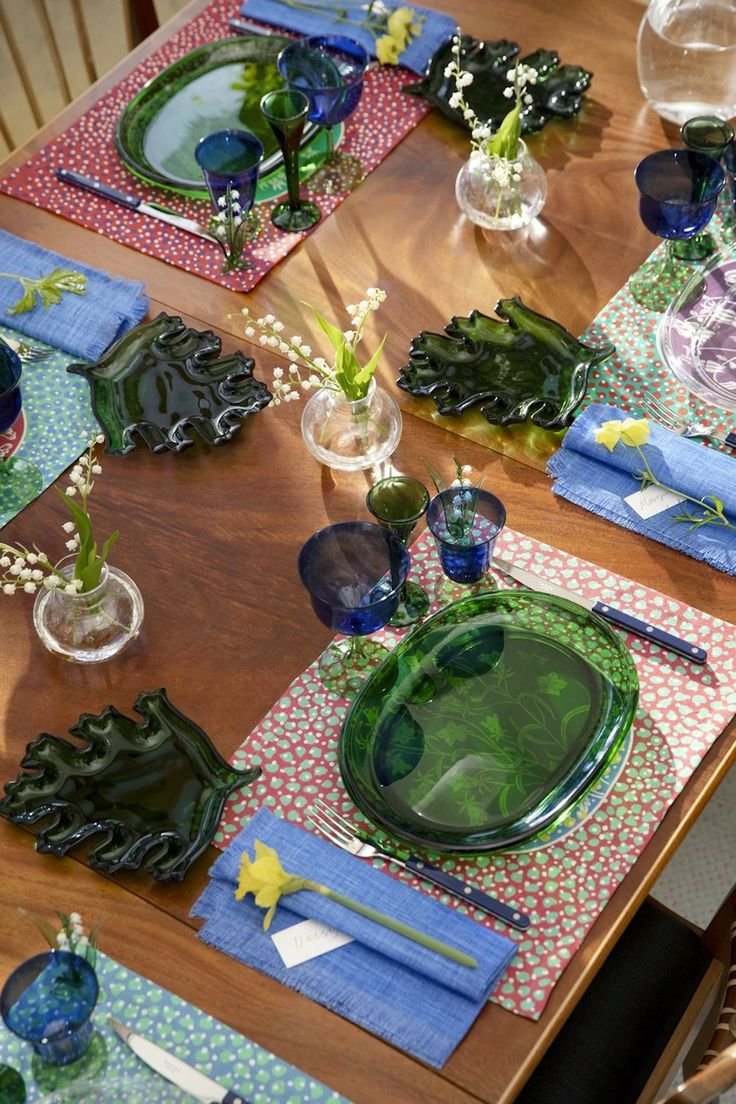
A casual table by Svenskt Tenn
Casual weeknight dinner
Let’s say you have friends popping over for a last-minute meal, or you just want to have a special family dinner. Even just setting the table with a few little touches can instantly make it special. Everything else can stay quite minimal and doesn’t need to be so coordinated. You can forgo a tablecloth and instead use placemats but not required. But do use cloth napkins — they somehow always make a big difference. Light a candle, of any kind. Finally decorate the table with a vase of flowers — even just a bud vase with a single stem — and short of that, a bowl filled with lemons, apples, or whatever seasonal fruit is in ample supply. Use your everyday plates, glasses, and flatware.
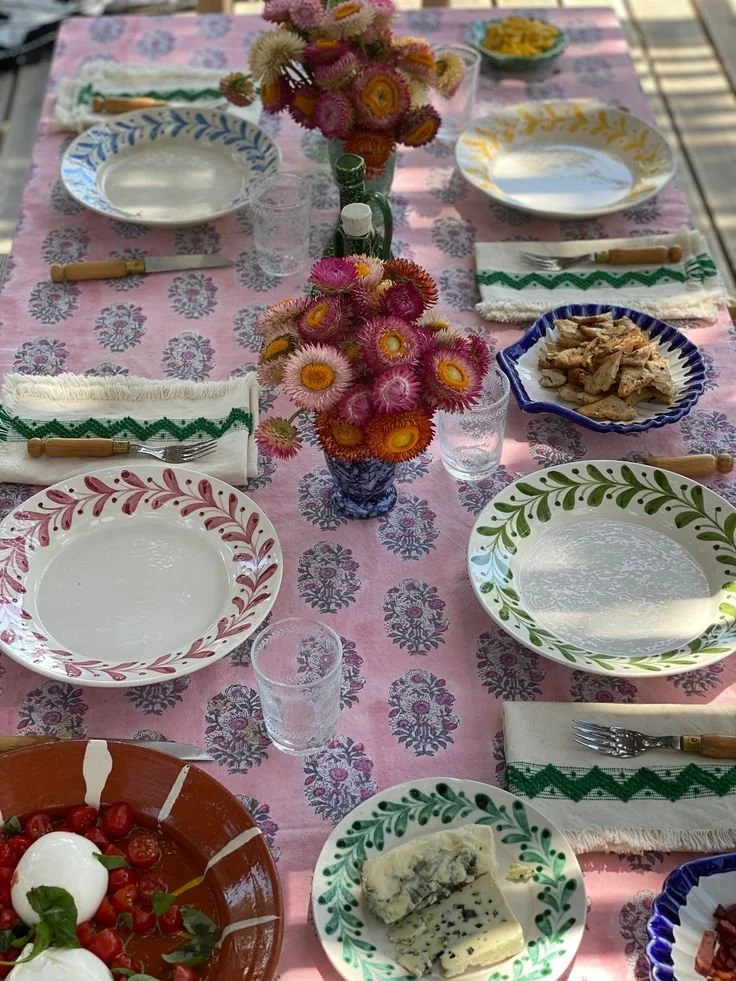
Carolina Irving & Daughers colorful table setting
Weekend brunch
A weekend brunch or BBQ is a great time to have a little fun with a tablescape while still keeping it casual. Embrace color and layers of pattern. A busy tablecloth can be forgiving of spills. Pick cloth napkins in a playfully contrasting pattern. If you have quirky table accents like salt & pepper holders and candleholders, this is the time to use them. Keep flowers simple but special — bunches of colorful blooms scattered down the table in bud vases (or creative containers like empty bottles or cans of tomatoes). Depending on the time of year and the vibe, you could add in seasonal produce like cherry tomatoes on the vine or bowls of berries or figs. If you have painted plates or colorful glasses, use those with everyday flatware.
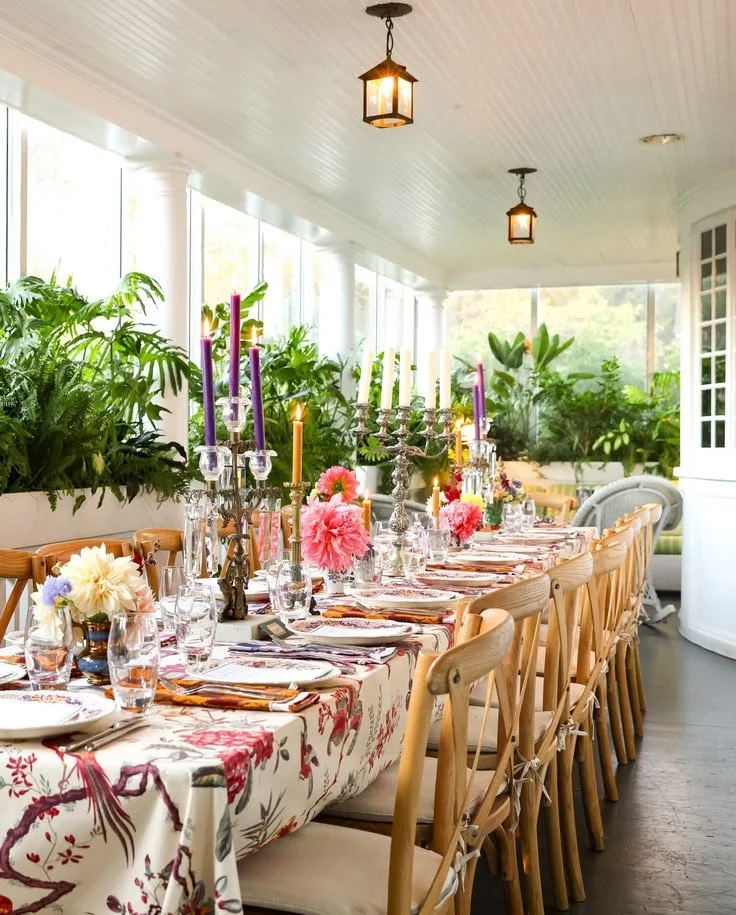
A tablescape by Mieke ten Have at Mayflower Inn
Dinner party
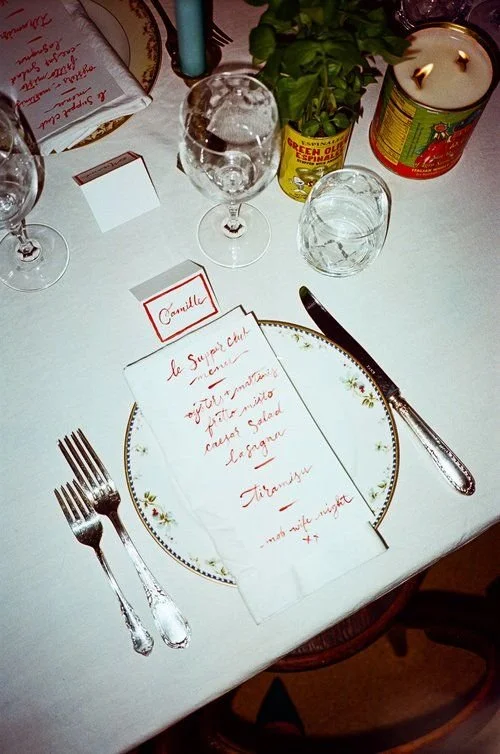
A dinner party is when you can really flex your creativity with a tablescape. It might be an excuse to use nicer tableware, but even if you don’t have that’s fine. There’s a lot you can do with thoughtful details to elevate the table and create a backdrop for a memorable evening. I find it helps to start with a loose theme that can inspire both the menu and the tablescape. Even just having a descriptor word in mind helps — cozy, joyful, whymsical. From there you can start to think about what flowers or fruit, table accents, etc make sense. Either way use lots of different candles. Consider creating place cards and a menu (see more below) — they don’t cost anything and really feel special.
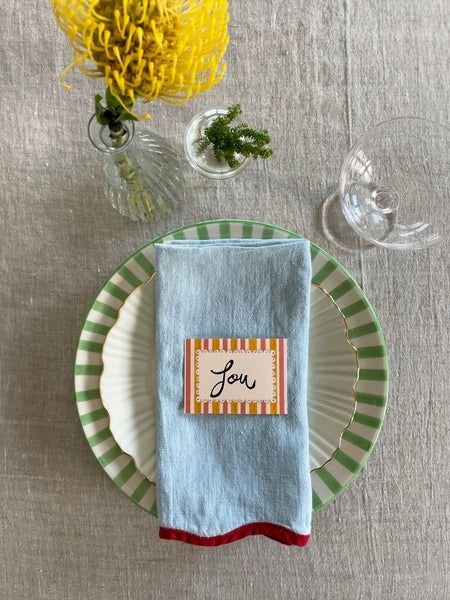
The Power of Details
As you can gather, I believe strongly in the power of details to bring a tablescape to life. Here are a few of my go-tos.
Fresh flowers
In an ideal world we’d all traipse to the farmers market or flower district to pick up fresh flowers. But to be honest with you, if you pick the right flowers from the grocery store, they’ll look just as good. Avoid anything with a strong scent as that can throw people off when eating (no lilies, hyacinth, etc). As I mentioned above, a mono arrangement with blooms of all the same type and color (or tones of one color) always look good. A few of my favorite grocery store flowers are: tulips, peonies, alstroemeria, chamomile, carnations, and simple roses.
Cloth napkins
I have a drawer full of cloth napkins because they’re the quickest way to pull a table together. I like to collect both solid color napkins and patterned napkins. Solid napkins, in every shade of the rainbow, work well with boldly patterned tablecloths and plates. Patterned napkins look great on their own or to create pattern plays with tablecloth. Striped napkins or block print napkins with a small print are the most versatile. I like to fold a napkin in half and place on each place setting. It’s lovely to put a flower or other small decorative touch on top.
Candles
Likewise, I always have a supply of candles, of all types and colors including…
Pillars - A grouping of different heights can look so dramatic down a table. These pillars in ivory are the best. Or for a more elegant look, I put them in hurricanes. I have and adore these etched hurricanes and these simpler ones.
Taper candles - I have colors for every season along with classic white and even black (for Halloween). Trudon makes the most stunning colors (I always have burgundy tapers for holiday and khaki tapers for spring/summer). It can be fun to have candles with unique details like painted or marbled or shapes like twisted.
Votive candles - You don’t need expensive votive holders — even just mercury glass ones are nice (and what even planners use). Always go for real burning candles! Not battery. The short, squat votives burn out so quickly so I like to get the taller candle inserts. Make sure they’re always in a container before putting in your holder. I learned the hard way that it’s a nightmare to get melted candle out of the bottom.
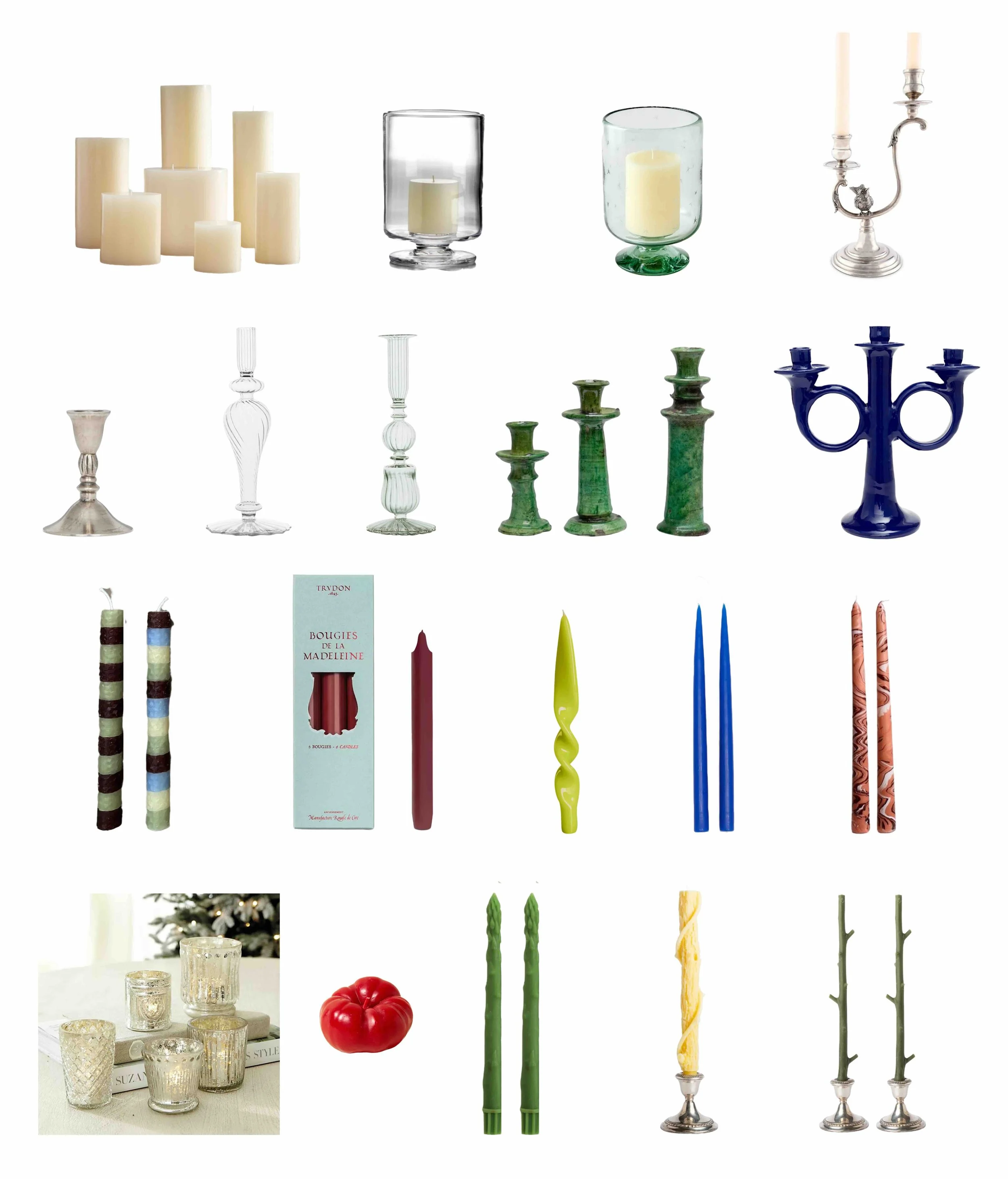
Row 1: Pillar candles. Simple hurricane. Etched star hurricane. Pewter bird candelabra. Row 2: Silvered brass candle holder. Clear glass candlestick holder. Pink glass candlestick holders. Tamegroute candle holder. Blue candelabra. Row 3: Striped beeswax taper candles. Trudon taper candles. Twisted candles. Colorful taper, cobalt (comes in other colors). Marbled tapers. Row 4: Mercury glass votive holders. Heirloom tomato candle. Asparagus tapers. Oak stick candle. Maple stick candles.
Small touches
For special or intimate occasions like holidays or dinner parties, it can make a big difference to add small touches like handwritten menus and/or placecards. Use watercolor paint to write out the words in cursive and add a little design flourish like a bow or polka dots (trust me, it looks good even if you’re not an artist). Another idea is to cover a table with craft paper and paint or draw the names directly on the place setting.
My Go-To Table Setting
My biggest tablescape inspiration comes from the seasons when I’m most likely to create a tablescape — holiday and summer.
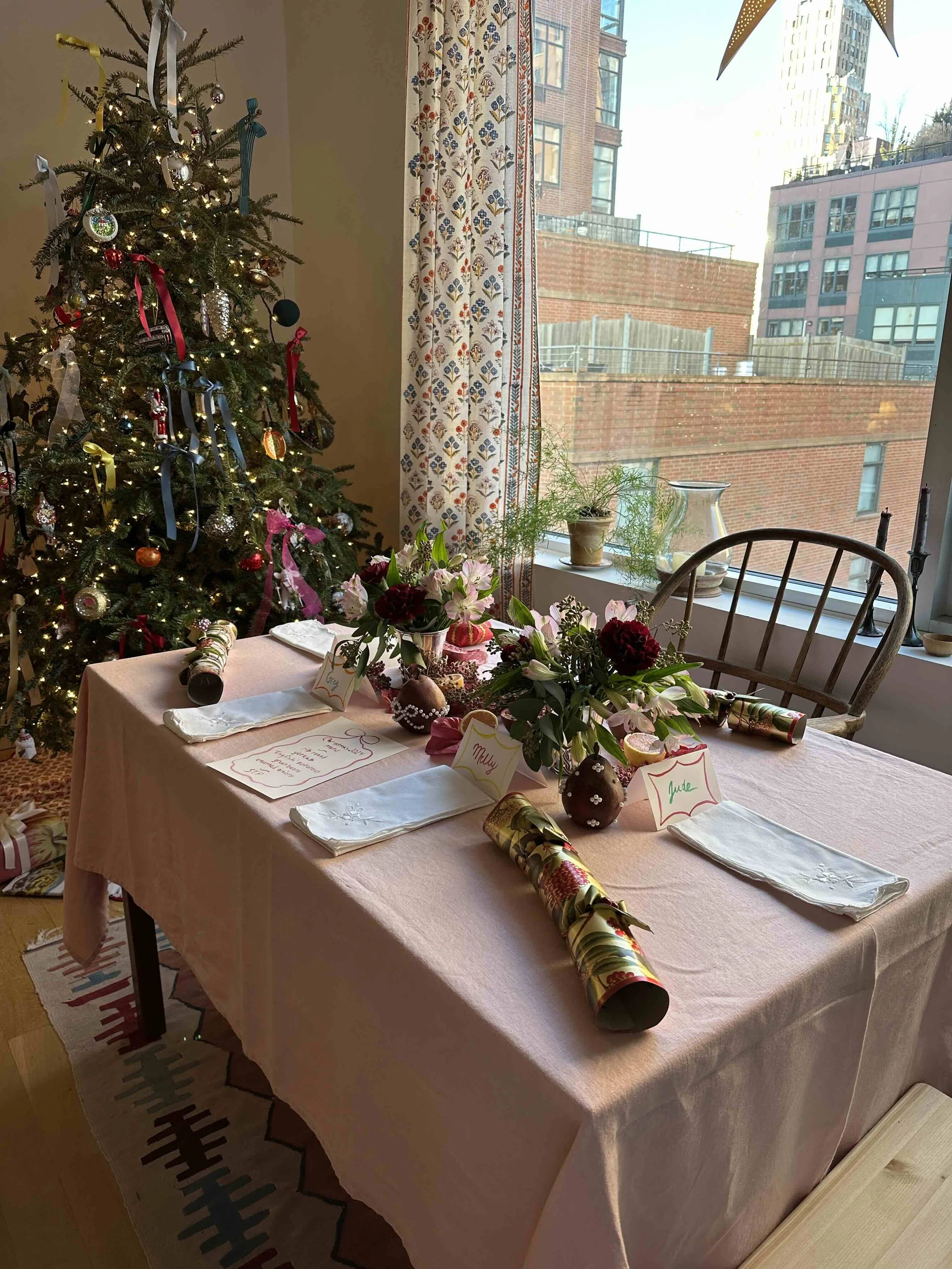
My pink and red holiday table
Holiday table
In the past I’ve gravitated to a color palette of red and pink — I like how it’s not super traditional but still feels festive. The pink comes from a tablecloth I’ve gotten so much use from, paired with white linen napkins. I use simple white plates and my elegant pink drinking glasses and wine glasses. I decorate the table with various fruit and vegetables including radicchio, pink lemons, and pomegrantes and silver mint julip cups holding red carnations, greens, and pink alstroemeria.
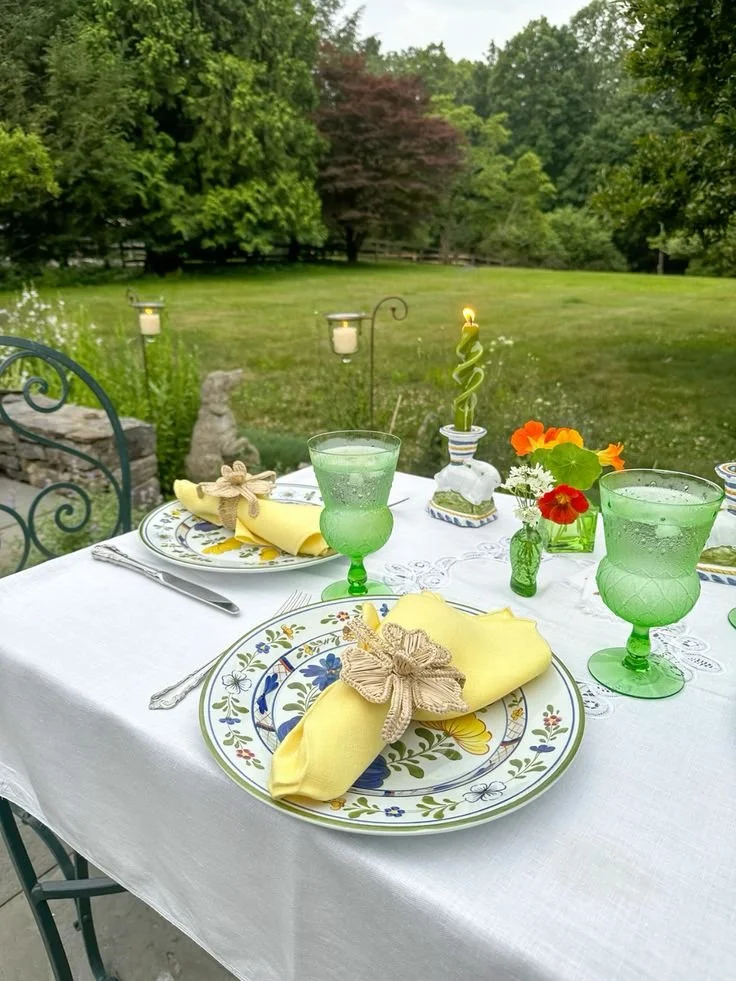
A summer table setting I loved
Summer table
When I was in England a few summers ago, I picked up a set of handpainted Italian plates that I simply adore and use to build summer tablescapes around. I kept the background simple with white tablecloth but paired with yellow linen napkins and green glassware. The unique unexpected object doubles as a candleholder — a sweet ceramic bunny with twisted green taper candles. The flowers are nasturtiums plucked from the garden.
For more tablescape inspiration with shoppable looks, check out my styling guides to casual table settings and formal table settings.
Or, shop my edits of dinnerware, serveware, glassware, and table linens.