
The Complete Guide to Shopping for Vintage Decor Online
Search terms, platforms, and insider strategies to find affordable, one-of-a-kind pieces for a collected home

A collected home isn't built overnight — it's made piece by piece, find by find. And the best part? Some of my favorite pieces cost under $50. I’ve been collecting vintage decor for a long time and have a lot of pro tips to pass along.
Consider this your "cheat sheet" for finding affordable vintage online including where to shop and how to find the best finds. If you don’t have time to do the digging yourself, I share curated vintage finds monthly in my Substack SINGULAR – subscribe here to get them sent to you monthly when you upgrade to paid.
Why Shop for Vintage Online?
A key to creating a cozy, collected home is mixing vintage with new pieces. Here’s why:
More accessible price points: You can get amazing deals on vintage decor and furniture instead of buying new. What’s the saying: someone’s trash is another’s treasure? Not to mention quality vintage often maintains or even appreciates in resale value compared to depreciating modern goods.
One-of-a-kind pieces (vs. mass-produced): It is so much more special to have pieces that not everyone else has to avoid a cookie cutter look. Vintage decor has history and character that imbues your home with soulfulness and personality making it distinctly yours.
Quality construction from different eras: It really is true that they just don’t make ‘em like they used to. Vintage pieces are almost always better made with solid materials and craft details. They’re built to last for your lifetime and beyond.
A curated guide to creating a one-of-a-kind home: interior inspiration, styling tips, & unique objects
FOLLOW ALONGRELATED ARTICLESWhere to Stay in England: The Best Design Hotels & More
sense of spen• cer
noun [sɛns, əv, ˈspɛnsər]
Reflecting one’s identity through their interiors
A home with character and soul
When a house becomes a home

Where to Shop
I’ve spent a LOT of time shopping for vintage decor and furniture online. I go to specific online shops/marketplaces based on what I’m looking for and what I’m willing to spend for the effort. Here’s an overview of each of them.
Comparison at a glance
Etsy | Broad vintage selection | $50–$1,000+ | Varies by seller | Filter: ships from USA, free shipping | Shop Etsy
1stDibs | Inspiration & search term ideas | $500–$5,000+ | Poor curation | Exorbitant shipping; browse for ideas | Shop 1stDibs
Chairish | Curated discovery & design edits | $100–$3,000+ | Excellent | High fixed shipping + weight surcharge | Shop Chairish
eBay | Budget-friendly finds | $25–$800 (25% less than other sites) | Mixed (you do the work) | Underrated; requires more effort to find gems | Shop eBay
Poshmark | Home goods & smaller decor | $20–$400 | Hit or miss (peer-to-peer) | Good deals if you have a discerning eye | Shop Poshmark
Independent Sellers | Specialty items with focused curation | $30–$500+ | Excellent | Usually Instagram or website; specialty = quality | See my favorites below
Facebook Marketplace | Local pickup & unbeatable deals | $10–$600 | Very mixed bag | Save on shipping; set radius to expand search | Shop FBMP
Etsy
What they specialize in: Etsy has one of the broadest offerings of vintage with lots of affordable options across categories including decor and furniture.
Price range you can expect: There’s a full range from decor and tableware under $100 - several hundred and furniture $200-$1000 depending on size/type
Quality of sellers/curation level: Sellers tend to specialize in type of vintage, and they can vary greatly in terms of their quality.
Shipping considerations: Some sellers will ship free from abroad, but otherwise the international shipping can be cost prohibitive so I filter by ‘ships from USA’ and ‘ships free’ – that saves me a lot of heartbreak.
For more, I wrote a Substack about The Etsy Shops I Keep Going Back To (And The Search Terms I Use to Find the Good Stuff).
1stDibs
What they specialize in: This online marketplace is high-end but worth browsing to get ideas for search terms.
Price range you can expect: Very expensive, which reflects the quality as well as the fact that dealers mark up their prices to cover the cut they have to pay 1stDibs.
Quality of sellers/curation level: Most of the sellers are professional dealers. I find the curation of the site is really bad, so it can be very hard to discover stuff I like amidst the sea of listings.
Shipping considerations: Shipping is almost always exorbitantly high.
Chairish
What they specialize in: Like 1stDibs, it is a premium online marketplace with a mix of vintage and new quality pieces.
Price range you can expect: I find it has a wider range of prices with some more affordable finds alongside mega investment pieces.
Quality of sellers/curation level: It consists of mostly dealers. The site also does a good job of surfacing interesting edits – by tastemakers or designers, based on design styles, or seasonal.
Shipping considerations: Shipping starts out at a pretty high fixed price and then goes up based on weight if shipping furniture.
eBay
What they specialize in: The original online auction site is underrated for vintage finds. I think of it like the place that dealers go to buy their vintage.
Price range you can expect: There’s a wide range of prices depending on the piece, but it tends to be 25% less than the more curated sites.
Quality of sellers/curation level: Sellers range from professional to amateur collectors. Don’t expect the same amount of polish as other sites — that doesn’t mean there arent gems to be found. You have to work a little harder and know what you’re looking for.
Shipping considerations: Sellers set their own prices so shipping is more reasonable.
Poshmark
What they specialize in: The site is a mix of fashion and home goods ranging widely in quality. I find it really helps to look up specific search terms and brands.
Price range you can expect: Prices are a lot less than the other marketplaces.
Quality of sellers/curation level: This is a peer to peer marketplace — people might sell things they don’t know the value of so if you have a discerning eye, you can find some good stuff. But it takes patience, there’s a lot to sort through.
Shipping considerations: The sellers set the prices so they’re generally not too bad.
Independent sellers online
What they specialize in: Some dealers sell exclusively on Instagram or through their websites to avoid giving away margin to bigger marketplaces. Generally speaking, they focus on small goods that are easily shippable.
Price range you can expect: You can find some good deals. Obviously expect to pay more for antiques and finer pieces like art, silver, and fine china.
Quality of sellers/curation level: Individual dealers tend to have a specialty, so the curation is pretty good.
Shipping considerations: They set the price so it’s not a rip or sometimes the shipping is included in the price.
Facebook Marketplace (local)
What they specialize in: This is a goldmine for local pickup finds. You can set the perimeter for how far away the sellers are. If you’re willing to drive, you can increase your chances of finding what you’re looking for.
Price range you can expect: You can get some unbelievable deals. A lot of times people are selling to move the items fast so they can be more flexible on prices (or they don’t know what they have).
Quality of sellers/curation level: It’s such a mixed bag of items, but the big upside is that the algorithm surfaces things you’re interested in. Train it by liking things you’re interested in or searching keywords.
Shipping considerations: Another benefit is that you save on shipping costs by doing local pick up instead.
How to Search Like a Pro
Search Strategy Tips
Building a "wish list" of searches: Keep a running list of things you’d like. Take a peak before you search/go shopping to help you focus. I also firmly believe you can manifest treasures by visualizing them and having conviction you will find them.
Broad vs. narrow searches: The more specific you can get with your search terms, the more likely you will be to find what you’re looking for. I have some suggestions for you below.
How to use filters effectively: Unless you use filters, you will get far too many options that you can hardly sort through. Start with price, setting it a little higher than you’re willing to go. Filter by ‘Ships from US’ unless you’re willing to pay overseas shipping AND ‘Free shipping’ (some overseas sellers offer free shipping). Also filter by vintage if possible.
Seasonal timing: One trick is to search against the season, so if it’s summer, search for winter items which will have less competition. If you’re searching by season, be sure to do it early to beat others.

Category Search Guides
These are my go-to search terms when Im casting a broad net to find unique vintage pieces online on any of the platforms above.
Vintage/antique terms
These are my reliable searches for unique things to add character to a home. They’re just broad enough to yield many options, and each one is quite unique. I’ll typically add a product category after to narrow the results further.
Examples: suzani (bedspread, tapestry/wall hanging, stool), kilim (rug, pillow), ironstone (pitcher, platter), majolica, faience, Quimper, Chinese export (plate), toleware (candlesticks, sconce), imari (pitcher, plate), cabbageware
Style descriptors
These are specific design styles distinguished by a design motif or painting method and typically originate from a specific country and time period. You can narrow the results by adding a product category like decor, lamps, furniture, etc.
Examples: chinoiserie, neoclassical, Gustavian, Arts and Crafts, Shaker
Specific item searches
I always have a list of specific things. These can be things I’m always in the market for. Or they’re items that I once saw and got away from me or are my white whales – ie: a once-in-a-lifetime find.
Examples: mirrored wall sconces, italian gilt sconce, mid-century Swedish paintings, Welsh blanket, vintage vide poche, vintage silver/ceramic candle holder, vintage urn lamp, vintage Swedish rug, vintage textile (add bedspread, wall hanging), vintage still life oil painting
The less obvious ones that surface hidden gems
I like to have some very specific search terms in my back pocket if I’m hitting a wall and can’t find anything special. These will yield fewer results but because of the specificity they’re usually better and less to go through.
Examples: greek key design motif, antique painted furniture, bamboo style, Verdigris, shell motif, wave detailing, millefiori glass
Pro Tips for First-Time Vintage Shoppers
Start with smaller items: These items are often less expensive and are easier to ship. So it’s a good way to get your feet wet.
Shop curated edits: Look for edits made by tastemakers whose style you identify with or by style or theme. This is a shortcut to find things you’ll like and also helps to train your eye.
Follow shops: When you find items you like, click on the shops to see if they have other things you like. If they do, follow them and set up alerts if possible to find out when they post new items.
Heart products: Like items you’re interested in, and you’ll often get an alert with a deal, like 10-15% off. Not a lot but can help cover shipping.
Think before you buy: Don’t worry too much whether something will work with what you have – if you love it, it will come together. However, I think it’s good practice to consider whether you have a place or a use in mind for the item.
When to splurge vs. save: Splurge on vintage anchor pieces (like dressers, sideboards, or unique lighting) that make a statement and feature heirloom craftsmanship as well as quality, timeless items that will get a lot of everyday use. Save on easily swappable decor (such as vintage glassware, books, or small frames) and on items that require extensive, expensive repairs.
Negotiating on price: On some platforms like Facebook Marketplace, Poshmark, and independent seller sites, there's room to negotiate. Here's my approach: if an item has a minor issue (small chip, loose hinge), I'll ask for a discount. If you're buying multiple items, ask if they'll bundle at a lower total price. Be respectful and reasonable—most sellers are willing to negotiate if you're genuine. On curated marketplaces like Chairish and 1stDibs, prices are generally fixed, so don't bother. For auctions on eBay, you're bidding rather than negotiating, but you can set your max bid and walk away if it goes higher than your comfort level."
What to Look For (To Make Sure You’re Getting A Good Deal)
Once you've narrowed your search and found something you're interested in, the real work begins: determining whether it's worth buying. Here's what I evaluate before I hit purchase. Think of this as your quality checklist to make sure you're getting a genuine deal and not just a pretty picture.
Assessing condition: Most honest sellers will disclose any damage and document in photos. It’s ok to buy something in this condition, but make sure it is factored into the price by comparing with comparable items.
Photography quality: Well lit, clear product shots can be an indicator of an experienced seller who is a professional. Flag their shop for the future. However, it must be stated that items can be worth it even if the photos aren’t good, and you might even be able to get a better deal from a more amateur seller.
Pricing comparisons: Before you buy, make sure you find several comps for the item to compare prices and quality. You will get a sense whether it’s a good price or not and generally what you can expect as far as condition.
Return/damage policies: You definitely want to look at all the fine print before making a purchase. Check to see if the shop accepts returns and what their policy is on damaged goods. In some cases the marketplace might have a blanket policy (for instance, Etsy guarantees items that have been damaged in shipping if you provide proof).
Seller reputation: Before pulling the trigger, look at the seller’s ratings and number of sales and scan comments to make sure they are legitimate and flag any issues others have had with interactions or item quality.
Not for resale: I would caution you from buying items solely because you think they are a good investment. Instead, buy because you actually want them.
Red flags to avoid: I tend to avoid shops that have few items or mostly specialize in a different product category.



My Vintage Finds
When I look around my home, many of the stand out pieces are vintage — many of which were sourced online. Each one has a story to tell and bring so much warmth and soul to my home. Here’s a little tour — and where I got them.
Romanian bowl: This was one of the first vintage pieces I bought online. I saw it on an Instagram post by an independent seller in England I follow. This traditional pottery is hard to source in the U.S. so I had it sent to my sister in law and brought home on my next trip to England.
Gustavian dresser: For what felt like ages, I searched Facebook Marketplace for a dresser to go in my son’s nursery. I wanted something with character, and the local pickup makes more sense for large furniture. My searching paid off with a genuine antique dresser painted with a bee design.
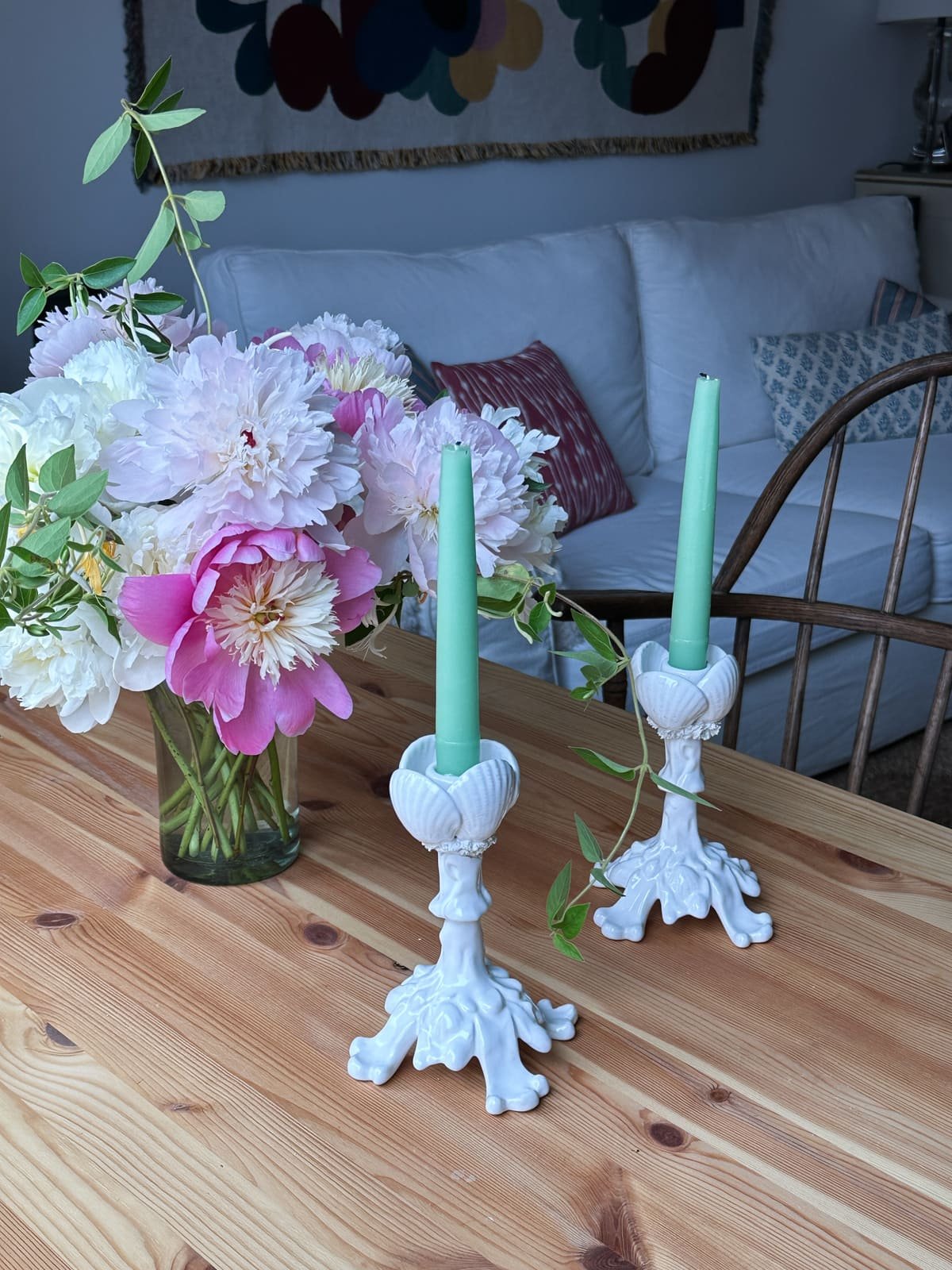
Bordallo Pinheiro candleholders: I spotted a single one on a broad Etsy search for $30 and bought for my friend who’s a fellow shell lover. Sadly, it arrived broken (this is how I know Etsy refunds you for damage). On a lark I searched for the exact item on eBay and was shocked to discover not just a replacement but a whole set for $50. I gave my friend one and kept a set for myself (I just repaired the broken one).
Rattan tray: I shared my favorite Etsy shops on Substack, and a home shop I had never heard of left a comment. That’s how I found this tray which I wasn’t looking for but know is incredibly useful.
I spend 10+ hours sourcing these finds every month. If you want the curated discoveries without the digging, upgrade to paid on my Substack SINGULAR to get monthly vintage finds delivered to you. Start with a free subscription here.